Most people associate cavities with eating too much sugar or skipping brushing, but did you know that staying dehydrated can also put your teeth at serious risk? At the Best Dental Clinic in Wakad, we regularly see patients who are surprised to learn that their daily water intake plays a direct role in protecting their smiles. Whether you are a busy professional in Pune or a growing child, dehydration is a silent threat to your oral health that deserves close attention.
What Is Dehydration and How Common Is It?
Dehydration occurs when your body loses more fluids than it takes in. It can range from mild, feeling slightly thirsty to severe, which can disrupt major bodily functions. In a warm and fast-paced city like Pune, mild dehydration is extremely common, yet many people do not even recognize it. You may be dehydrated if you experience dry mouth, dark-colored urine, fatigue, or headaches frequently throughout the day.
What most people do not realize is that even mild, chronic dehydration has a significant impact on your mouth, specifically on your saliva production.
The Saliva Connection: Your Mouth’s Natural Defense
Saliva is one of the most powerful protective forces in your oral cavity. It is not just water; it contains antibacterial enzymes, minerals like calcium and phosphate, and proteins that constantly work to neutralize acids, remineralize tooth enamel, and wash away food debris and harmful bacteria.
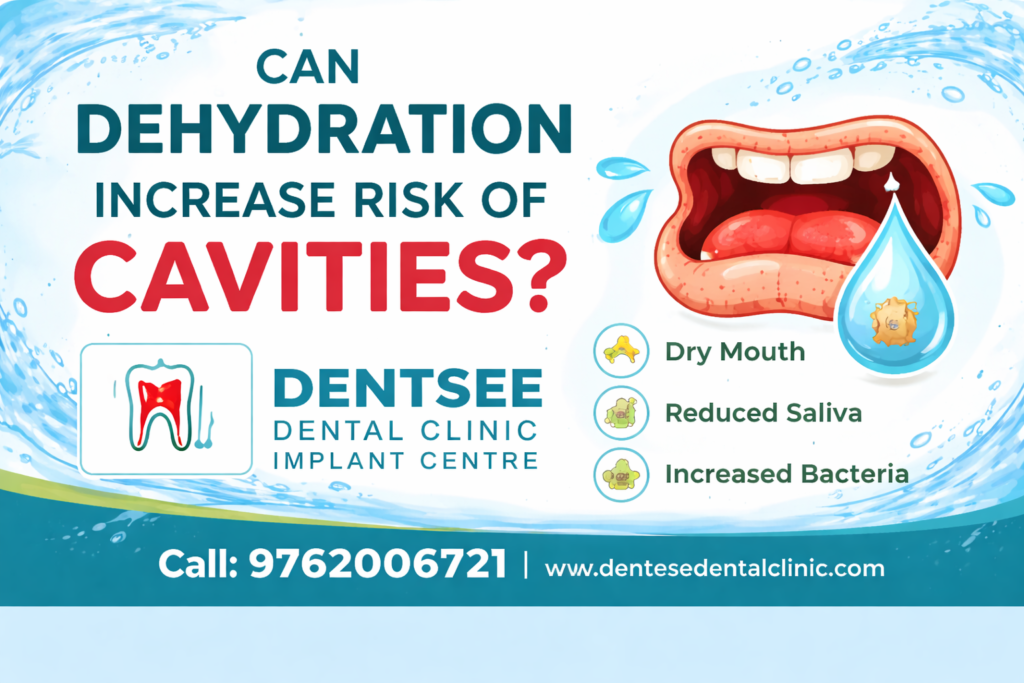
When you are dehydrated, your salivary glands simply cannot produce enough saliva. This condition is known as xerostomia, or dry mouth. Without sufficient saliva:
- Acids produced by oral bacteria are not neutralized, causing enamel erosion
- Food particles and sugars linger on teeth far longer than they should
- Harmful bacteria multiply at a faster rate
- The natural remineralization process slows down significantly
This sets the stage for cavities to develop sometimes even in people with excellent brushing and flossing habits.
How Dehydration Directly Increases Cavity Risk
In this case, the link between dehydration and tooth cavities occurs in a straightforward process. The consumption of minimal quantities of water leads to reduced secretion of saliva. Streptococcus mutans bacteria thrive in such an environment due to the minimal amounts of saliva. These bacteria metabolize carbohydrates left in the mouth to generate acid as a waste product. Saliva protects teeth from the harmful effects of the acid; however, in cases where the acid is not neutralized, it corrodes the enamel leading to cavities.
Additionally, many dehydrated individuals reach for sugary sports drinks, juices or caffeinated beverages choices that further feed bacteria and worsen acid levels in the mouth. This creates a cycle that is difficult to break without consciously prioritizing water intake.
Quick tip: Drinking a glass of pure water with each meal is among the easiest and most straightforward ways of protecting your teeth from cavities and weakening of the enamel.
Groups Most at Risk
Here are some groups that are vulnerable to hydration issues:
- Children and adolescents — who are usually so preoccupied with their activities that they forget to hydrate themselves
- Eldery people — as their body’s need for hydration gradually decreases with age
- Athletes — due to their excessive fluid loss during training sessions via sweat
- Individuals taking certain medication — as many antihistamines, antidepressants, and hypertension drugs induce dryness in the mouth
- Individuals who breathe with their mouths open — as this process can greatly reduce moisture levels inside the mouth
In case you belong to one of the aforementioned groups, then preventive dentistry measures become especially relevant.
Signs Your Dry Mouth May Be Harming Your Teeth
Beyond visible cavities, watch for these early warning signs that dehydration may be affecting your oral health:
- The presence of a sticky and dry sensation within the mouth for most parts of the day.
- Enhanced sensitivity in one tooth or more.
- Persistent bad breath despite brushing regularly.
- Development of white or chalk-like appearance on the teeth (this indicates early signs of enamel demineralization).
- Soreness or burning sensation experienced within the mouth.
- These are some of the symptoms one should pay attention to.
If you notice any of these symptoms, it is wise to consult a dentist before the damage progresses.
Prevention: How to Protect Your Teeth from Dehydration
1. Drink adequate water daily
The minimum requirement is 2 to 3 liters per day. This may differ based on one’s physical activity or environmental temperatures.
2. Reduce diuretics
Caffeine-containing drinks such as tea and alcohol contribute to increased dehydration. Should you choose to consume these drinks, you must compensate for their effects through additional intake of water.
3. Use fluoride toothpaste
Fluoride will contribute to the strengthening of enamel and prevent enamel from damage due to decreased salivation. It’s necessary to brush teeth twice a day using fluoride toothpaste recommended by the dentist.
4. Chew sugar-free gum
Chewing can stimulate production of saliva. Choose sugarless gum with xylitol that prevents bacteria growth leading to cavities.
5. Schedule regular dental checkups
No matter how good a person’s at-home oral hygiene regime may be, it cannot replace dental cleaning and monitoring. The dentist will detect erosion and tooth decay early enough, avoiding future expenses and suffering.
When to Visit a Dentist
If you have ongoing symptoms like a dry mouth, sensitive teeth, or stains on your teeth, take action immediately. It is easier to prevent any complications than to deal with more serious problems down the road. Our dental professionals at Best Dental Clinic in Wakad Agrawal DentSee Clinic can provide you with thorough oral examinations, fluoride treatment, and a customized hydration plan for healthy teeth all year round.
Yes, drinking water, especially fluoridated water, supports saliva production, rinses away food particles and bacteria, and helps neutralize mouth acids. It is one of the simplest and most effective cavity-prevention habits you can adopt.
Dry mouth, or xerostomia, is a condition where the salivary glands do not produce enough saliva. Since saliva protects teeth by neutralizing acids and remineralizing enamel, a reduction in saliva directly increases the risk of cavity formation and gum disease.
Not really. Most sports beverages contain excessive amounts of sugar and acids which actually cause demineralization and deterioration of the tooth enamel. Even though these drinks help keep the body hydrated, they do far more damage to your teeth. Water is the way to go.
The recommended amount of daily water intake depends on an individual, but for the average person 2 to 3 liters are required every day, and even more when exercising, if the weather is hot or during illnesses. Consuming water regularly is better for dental health than gulping large quantities.
Yes, indeed. Quite a few of the medicines we take, from antihistamines and antidepressants to diuretics and blood-pressure meds, have dry mouth among their potential side effects. Should you be under long-term medication, let your dentist know about it in order to receive appropriate advice.
For individuals who experience dry mouth on a continuous basis, dental visits are usually recommended once every three to four months instead of the regular six-month period. This is due to the fact that the condition increases the chances of developing cavities at a faster rate.

Dr. Neha A. Agrawal
Dr. Neha Agrawal, a profound dental practitioner Graduated from University of Indore having vast experience of 12 years. She has worked under renowned Dental experts at Delhi, Nagpur, and Pune. She has acquired expertise in RCT, single sitting RCT, dental cosmetics, smile design, dental implants and pediatric dentistry. Currently having practice at DENTURE Dental clinic & Implant center in Pimple Saudagar.