A chipped tooth, a cracked molar after a tough bite, or a tooth that has lost most of its structure after a root canal. These are the everyday situations that bring people into a dental clinic looking for answers. A dental crown is often the fix, but the moment your dentist mentions it, the next question is almost always about money. As a dentist in Wakad, I get asked about crown types and pricing almost every single day, and the honest truth is that there is no single answer. The right crown depends on which tooth needs it, how much you chew on that side, your budget and what you want the tooth to look like once it is done.
This guide breaks down every common crown material, what each one actually costs in Pune, how long it lasts and who it suits best. By the end you will know exactly what to expect before you sit in the dental chair, so the conversation feels less like a sales pitch and more like a decision you understand.
What Is a Dental Crown and Why Might You Need One
A dental crown is a cap that covers a damaged tooth completely. Think of it like a helmet for your tooth. It sits over the visible part, restores the original shape and lets you bite and chew without worrying that the tooth will crack further. The natural tooth stays underneath, and the crown protects whatever is left of it.
People usually need a crown in a few common situations. A tooth that has had a root canal becomes brittle over time, so a crown keeps it from splitting. A large old filling that keeps failing is better replaced with a crown. Teeth that are badly worn, cracked or discoloured also benefit, and crowns are a key part of dental implants and bridges too. If your tooth has lost more than half its structure, a filling alone will not hold up, and a crown becomes the sensible choice.
The Main Types of Dental Crowns
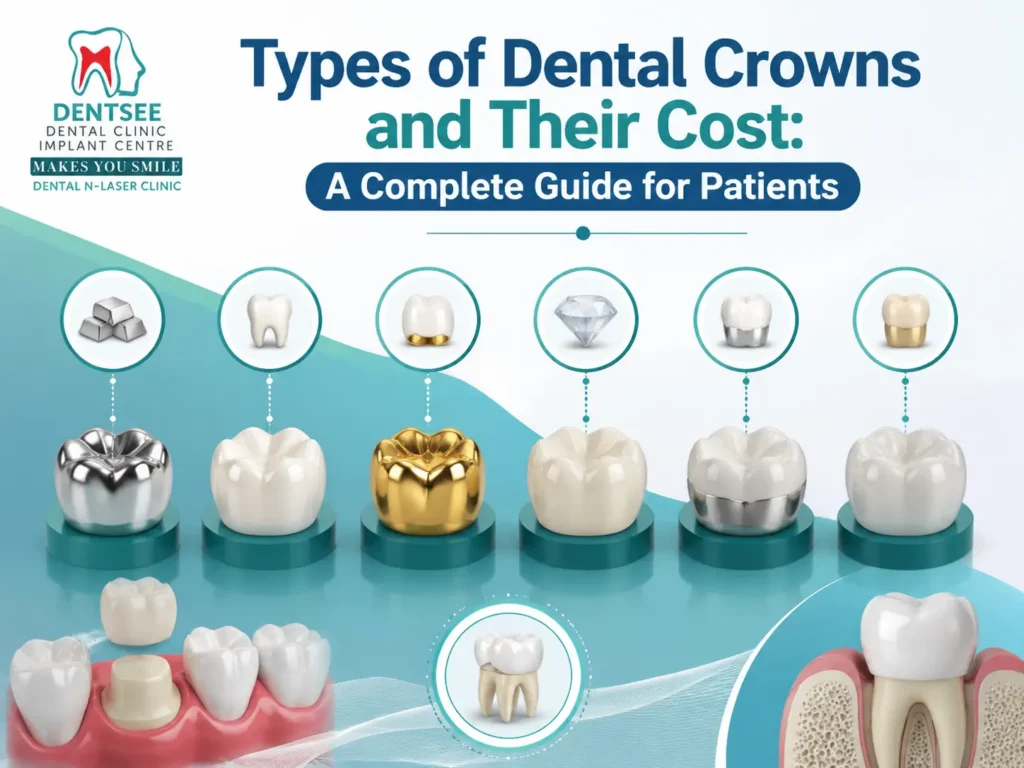
Crowns are grouped by the material they are made from. Each material behaves differently in the mouth, and the differences matter a lot depending on where the tooth sits and how you use it. Here is a clear look at every option you are likely to be offered.
1. Metal Crowns
Metal crowns are made from alloys that may contain gold, palladium, nickel or chromium. They are the toughest crowns available and almost never chip or break. Because metal is gentle on the opposing teeth and handles heavy chewing force without complaint, these crowns last a very long time, often well beyond fifteen years.
The obvious drawback is the colour. A gold or silver coloured cap stands out, so most patients only accept metal crowns on the back molars where nobody can see them. If you grind your teeth at night or need a crown on a tooth that takes a lot of pressure, metal is still one of the most reliable picks.
2. Porcelain Fused to Metal (PFM) Crowns
PFM crowns give you a metal core for strength with a tooth coloured porcelain layer on top for looks. For years this was the go to choice because it balanced durability and appearance at a fair price. They work well on both front and back teeth and have a long track record.
There is one catch worth knowing. Over time the gum can recede slightly and reveal a thin grey line near the base of the crown where the metal sits. It is not a health problem, but it can bother people who are particular about a flawless smile. For a budget conscious patient who wants something that lasts, PFM remains a solid middle path.
3. All Ceramic and All Porcelain Crowns
These crowns contain no metal at all, which means they reflect light the way a real tooth does. The result is the most natural looking crown you can get, and that makes them the first choice for front teeth and anyone with a metal allergy. They blend in so well that even close up it is hard to tell which tooth is the crown.
They are not quite as strong as metal under extreme force, so they are best suited to front teeth and lighter chewing areas. For visible teeth where appearance is everything, all ceramic is hard to beat.
4. Zirconia Crowns
Zirconia has become the favourite of modern dentistry, and for good reason. It is extremely strong, resists cracking and still looks natural enough for visible teeth. In many ways it offers the best of both worlds, the strength people want from metal and the appearance people want from ceramic. It works on front teeth and back teeth alike.
Newer layered zirconia options look even more lifelike than the early solid versions. If you want one material that handles almost any situation in the mouth, zirconia is usually the answer, and it is what I recommend most often at our clinic.
5. E-max (Lithium Disilicate) Crowns
E-max crowns are a premium all ceramic option known for an outstanding combination of beauty and decent strength. They are thin, translucent and incredibly natural looking, which is why cosmetic cases and smile makeovers often rely on them. For someone who wants the most attractive front tooth crown possible, E-max sits right at the top.
Dental Crown Cost in Wakad: A Clear Comparison
Cost is the part everyone wants pinned down, so let me be straight about it. Crown prices vary based on the material, the lab work involved, the clinic and the complexity of your case. The figures below reflect typical ranges per tooth in the Pune and Wakad area. Treat them as an industry estimate and confirm exact numbers during your consultation, since every mouth is different.
| Metal | 15+ years | Rs 8,000 to Rs 15,000 | Back molars, heavy chewers |
| PFM | 10 to 15 years | Rs 6,000 to Rs 12,000 | Budget cases, front and back |
| All Ceramic | 10 to 15 years | Rs 10,000 to Rs 18,000 | Front teeth, metal allergy |
| Zirconia | 15+ years | Rs 12,000 to Rs 25,000 | Almost any tooth |
| E-max | 10 to 15 years | Rs 15,000 to Rs 28,000 | Cosmetic front teeth |
Note: These are industry estimate ranges and not a fixed quote. Final pricing depends on your specific tooth, the scans needed and any preparatory work such as a root canal or build up.
What Affects the Final Price of Your Crown
Two patients can walk in needing a crown on the same tooth and still pay different amounts. A few real factors explain why the number on your treatment plan is what it is.
- Material choice. This is the biggest single factor. Zirconia and E-max sit at the higher end while PFM is more affordable.
- Lab and technology. Crowns made with digital scanning and high end labs cost more but tend to fit better and last longer.
- Preparatory treatment. If the tooth needs a root canal or a core build up first, that adds to the overall cost.
- Number of crowns. Multiple crowns or a full smile makeover changes the total, though per tooth costs can sometimes ease for larger cases.
- Clinic expertise. A clinic with advanced imaging and experienced specialists may price slightly higher, but the precision usually pays off in fewer problems later.
How to Choose the Right Crown for Your Tooth
The simplest way to think about it is to match the crown to the job. For a back molar that does the heavy chewing, strength wins, so zirconia or metal makes sense. For a front tooth that everyone sees when you smile, appearance leads, so E-max or all ceramic is the natural pick. If you want one material that does almost everything well, zirconia is the safe all rounder, and if budget is tight, PFM still does an honest job.
None of this needs to be decided alone. A proper examination, a look at how you bite and an honest chat about your priorities will point clearly to the right material. The best crown is the one that fits your tooth, your habits and your wallet, not just the most expensive one on the list.
How Long Does Getting a Crown Take
A traditional crown usually takes two visits. In the first, the dentist prepares the tooth, takes a scan or impression and fits a temporary crown. The permanent crown comes back from the lab in about one to two weeks, and the second visit is for fitting and cementing it. Clinics with same day digital systems can sometimes finish in a single appointment, though that depends on the case. The process is comfortable, done under local anaesthesia and far less daunting than most people expect.
Conclusion: Get Expert Crown Treatment from a Trusted Dentist in Wakad
Choosing a dental crown does not have to be confusing once you understand the materials, the lifespan and the real costs behind each option. Whether you need a tough zirconia crown for a molar or a natural looking E-max crown for your smile, the right guidance makes all the difference. As an experienced dentist in Wakad, our team focuses on precise, comfortable and long lasting crown treatments backed by advanced imaging and digital dentistry, so your restored tooth looks and feels exactly like your own.
Ready to fix that damaged tooth with confidence? Book your consultation today and let our specialists recommend the crown that suits your tooth, your bite and your budget. Call us or visit our clinic in Wakad, Pune to get started on a stronger, healthier smile.
Frequently Asked Questions
1. How long do dental crowns last?
Most crowns last between ten and fifteen years, and tough materials like zirconia and metal often last longer. Good oral hygiene, regular checkups and avoiding habits like chewing ice or hard objects help your crown last as long as possible.
2. Is getting a dental crown painful?
The procedure is done under local anaesthesia, so you should not feel pain during the treatment. Some mild sensitivity afterwards is normal and settles within a few days. Most patients are surprised by how comfortable the whole process is.
3. Which is better, zirconia or PFM crown?
Zirconia is stronger, looks more natural and lasts longer, which is why many patients prefer it for visible and load bearing teeth. PFM is more affordable and still reliable, making it a good choice when budget is a priority. The right pick depends on the tooth and your needs.
4. Can a dental crown be done in a single visit?
Clinics with same day digital scanning and milling can sometimes complete a crown in one appointment. Traditional crowns usually need two visits, one for preparation and a temporary crown, and another to fit the final crown after the lab returns it.
5. How do I take care of my new crown?
Treat it like a natural tooth. Brush twice a day, floss carefully around it, avoid biting very hard foods directly on it and keep up with regular dental checkups. With simple care, your crown will protect the tooth underneath for many years.

Dr. Neha A. Agrawal
Dr. Neha Agrawal, a profound dental practitioner Graduated from University of Indore having vast experience of 12 years. She has worked under renowned Dental experts at Delhi, Nagpur, and Pune. She has acquired expertise in RCT, single sitting RCT, dental cosmetics, smile design, dental implants and pediatric dentistry. Currently having practice at DENTURE Dental clinic & Implant center in Pimple Saudagar.

Dr. Ankush R. Agrawal
Dr. Ankush R. Agrawal is a Oral And MaxilloFacial Surgeon,Dentist and Implantologist in Wakad, Pune and has an experience of 21 years in these fields. Dr. Ankush R. Agrawal practices at Dentsee Dental Clinic, Laser and Implant Centre in Wakad, Pune,Dentsee Dental Clinic & Implant Centre in Wakad, Pune and Dr. Agrawal's maxillofacial surgeon Dental implant expert in Wakad, Pune. He completed BDS from Sharad Pawar Dental College, Sawangi, Wardha. in 2005 and MDS - Oral & Maxillofacial Surgery from Dr. D.Y. Patil Dental College Hospital, Pune in 2009.
He is a member of Indian Dental Association,Life member of Maharashtra Chapter of AOMSI,Life member of Reseacrh Society Of B.J.Government Medical College & Sassoon Hospital Pune,Life Member of Association of Oral & MAxillo Facial Surgery Of India and ITI MEMBERSHIP. Some of the services provided by the doctor are: Dental Fillings,Paedodontist,Immediate Dentures,Composite Bondings and Cosmetic suregery etc.